How we work
Why we make everything to order
4 min read
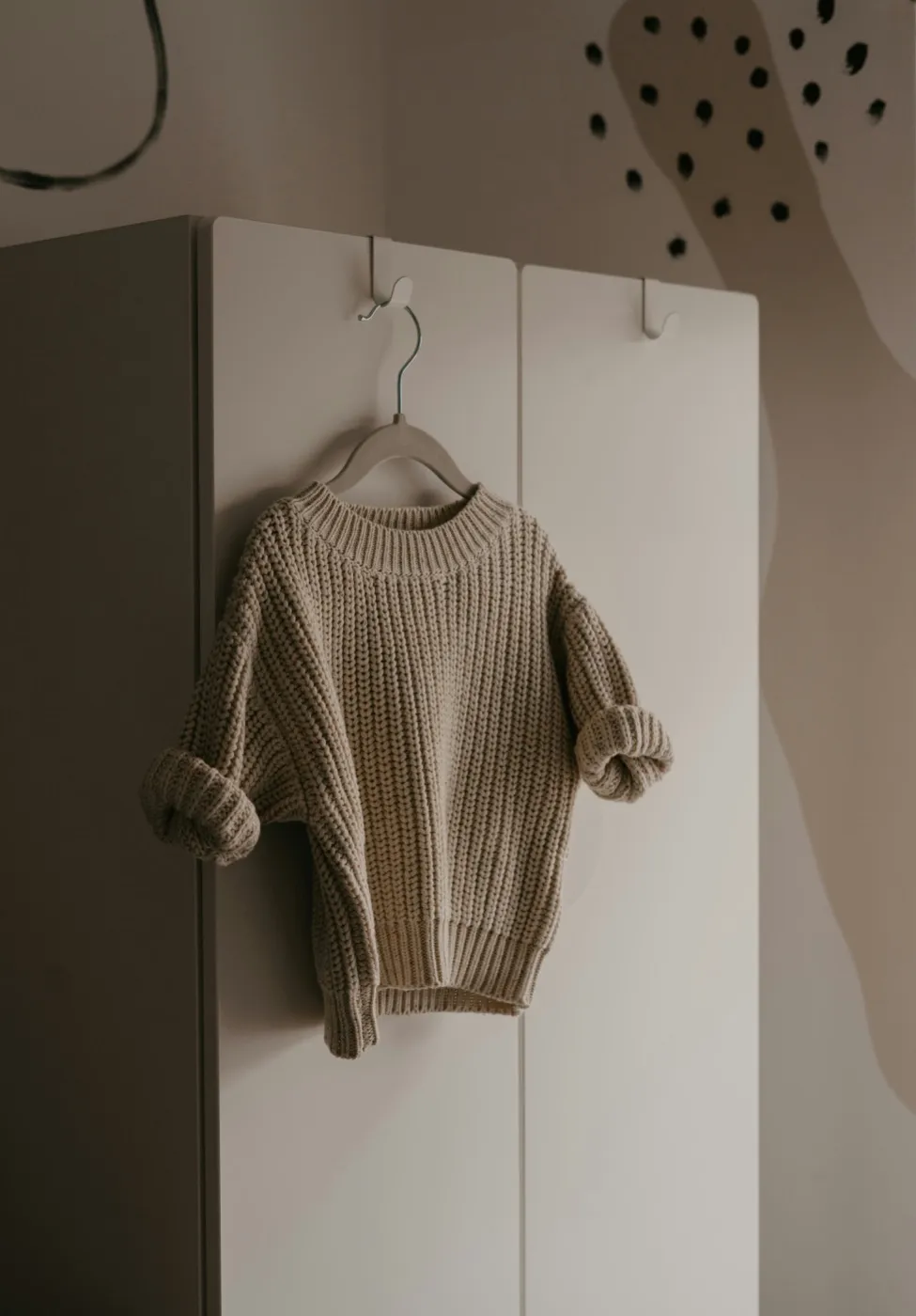
You cannot buy anything from us today and have it tomorrow. Every piece is knitted after you order it, and that takes two to three weeks. We know that is slower than you would like. Here is the honest case for doing it anyway, including the part where it costs you something.
What holding stock would mean
The normal way to sell clothes is to guess. You decide in advance how many mustard sweaters in medium people will want, you make them, and then you find out whether you were right. Guess low and you lose sales. Guess high and you are sitting on finished garments, which is money already spent on yarn and hours already paid for.
The industry answer to a bad guess is a sale. Then a deeper sale. Then an outlet. At the end of that chain sits a genuinely large amount of clothing that somebody made and nobody ever wore. For a small workshop, one bad guess in a season is enough to be a serious problem. Made at scale, the same guess is a big part of why so much clothing is destroyed unworn.
Less waste, in a boring practical sense
We buy yarn against orders. That means no shelves of a shade that turned out to be unpopular, and no size distribution invented by a spreadsheet. The waste we do have is offcuts and yarn ends, and those go into the crochet toys and the striped socks. Nothing gets knitted that nobody asked for.
This is not a grand environmental claim. It is a small workshop declining to make things that would not sell. But the arithmetic is real, and our unsold garment count for last year was zero, because there is no such thing here.
You get your size, not the nearest size
This is the part customers notice most. Because nothing exists until you order it, your measurements go into the pattern rather than being approximated by a label. Long arms are normal and not a problem. A longer body, a wider shoulder, a shorter sleeve: all of it is a note on the order sheet rather than an alteration afterwards.
Shade works the same way. We do not have to hold a colour in stock in every size, so we can offer more colours. If you want the cable cardigan in the coral we usually keep for socks, we will knit it in coral.
- Your measurements knitted in, rather than altered after.
- Any shade in our range, in any size, with no stock limits.
- Nothing made that nobody asked for.
- Two to three weeks from order to dispatch.
The honest tradeoff
Waiting is a real cost and we are not going to pretend otherwise. If you need a gift on Friday, we are the wrong shop. If you want to try something on before you commit, we cannot help there either, and choosing a size from a chart takes more effort than pulling one off a rail.
There is also less room for a change of mind. We take returns within fifteen days if a piece is faulty or genuinely does not fit, but we cannot put a garment knitted to one set of measurements back into a warehouse, because we do not have one. So it is worth being sure before you order.
The fix is to plan a little. Order the winter cardigan in October rather than the second week of December. Ask us about measurements before you order rather than after. If it is a gift, tell us and we will send a card, so there is something to hand over on the day while the piece is still on the needles.
Where the two to three weeks goes
People assume the wait is admin. It is not. A day or two to confirm measurements and shade and to get the yarn in. Then somewhere between six and fourteen days of actual knitting, depending on the piece, because socks are quick and a cable cardigan is not. Then a day or two for finishing: seams, ends, blocking and drying, which cannot be rushed in humid weather. Then dispatch.
If we ever quote you two weeks and it turns into four, we will tell you when we know, not when you ask.
Nothing here is knitted on spec. If it exists, somebody wanted it.
Meera, founder
Made to order is not a premium feature and we do not charge extra for it. It is simply the only way five people knitting by hand in Coimbatore can run a shop without gambling on next season.
More from the journal
New notes on yarn, care and how the studio works land here every few weeks.
Back to the journal