Studio
Meet the people who knit your order
3 min read
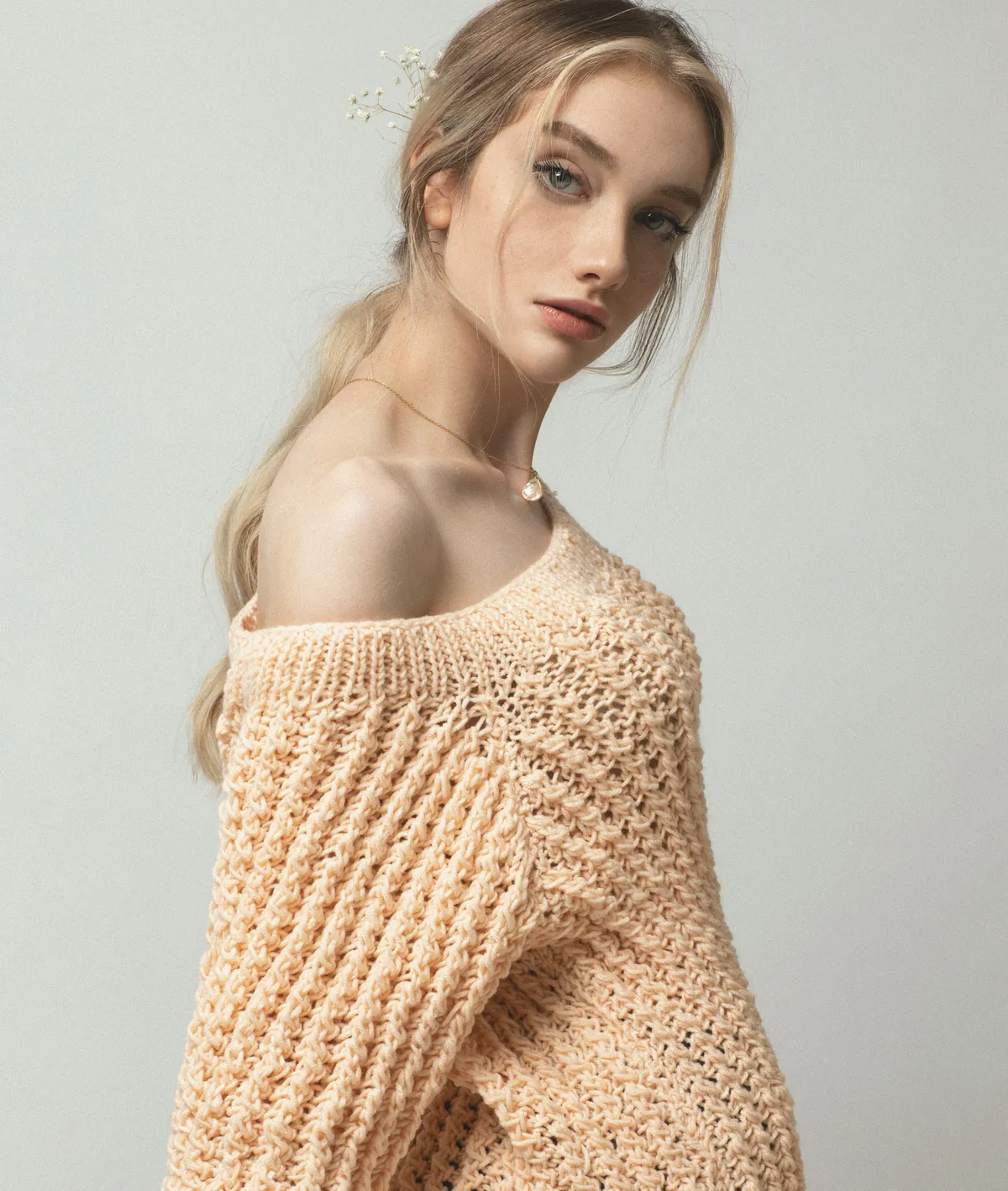
When you place an order with us, a specific person picks up the yarn and knits it. Not a machine, not a factory floor, not a queue. There are five of us and we all live within about twenty kilometres of each other in and around Coimbatore. Here is who you are actually buying from.
Meera
Meera started Kaleido Knits and still knits most of the cardigans herself. She learned from her grandmother in Pollachi at nine years old, on needles cut down from bicycle spokes, then did not knit seriously again until she was twenty six and bored at a desk job. She is the one who works out a pattern when somebody asks for something we have never made. If your order has an unusual measurement or a shade we do not normally use, it lands on her table first.
She is quick, and she is quicker on cables than anyone here. A cable cardigan takes her about eleven days of evenings.
Lakshmi
Lakshmi runs finishing, which is the part of the work nobody photographs. Seams, ends woven in, buttons, blocking, the final press. She was a tailor for over twenty years and came to knitwear late, and she is merciless about a seam that pulls. More than one piece has gone back to be reknitted because she did not like the way a shoulder sat.
If your sweater arrives and both sleeves are exactly the same length, that is her.
Anitha and Devi
Anitha and Devi are sisters and they work as a pair, mostly on babywear and the smaller accessories. Between them they have knitted almost every romper and baby set we have shipped. They are fast, they are careful about anything that will sit against a newborn, and they have firm opinions about which yarns are soft enough. Two shades got dropped from our range because Anitha refused to knit a baby set in them.
Devi also does most of our crochet: the bunnies, the bouquets, the market totes. She taught herself from videos during the lockdown years and is now better at amigurumi than the rest of us put together.
Kavitha
Kavitha joined two years ago and knits socks, beanies and leg warmers, which sounds like the small stuff until you have turned a heel neatly forty times in a month. She is the youngest of the group at twenty three, studies part time, and works the hours that fit around her classes. She is also the reason our colour combinations got braver. The rainbow socks were her idea and none of us expected them to sell the way they have.
How the work actually happens
Everyone works from home, on their own hours. Some knit in the early morning before the house wakes up. Some knit late, with the television on. Meera drops off yarn and collects finished pieces twice a week, and the group keeps a running chat for questions, photos of half-done sleeves and arguments about button colour.
We pay per piece, at a rate agreed before the work starts, and the rate does not change if a piece takes longer than we estimated. That is our estimating problem, not theirs. Nobody here is doing this as a hobby with a nice story attached. It is paid work that fits around families, studies and other jobs, and it is why we can say your order is made by hand with no asterisk after it.
- Five knitters, all in and around Coimbatore.
- Everyone works from home on their own schedule.
- Paid per piece, at a rate agreed before the work starts.
- One person knits your piece from cast on to cast off.
People think knitting is relaxing. On the third sweater of the week it is not. But it is still the only work I have had where I can see exactly what I did at the end of the day.
Lakshmi
We plan to keep the group small. A bigger team would mean more orders and shorter waits, but it would also mean we stopped knowing whose hands made what. Right now we still know. If you write and ask who knitted your cardigan, we can answer with a name.
More from the journal
New notes on yarn, care and how the studio works land here every few weeks.
Back to the journal